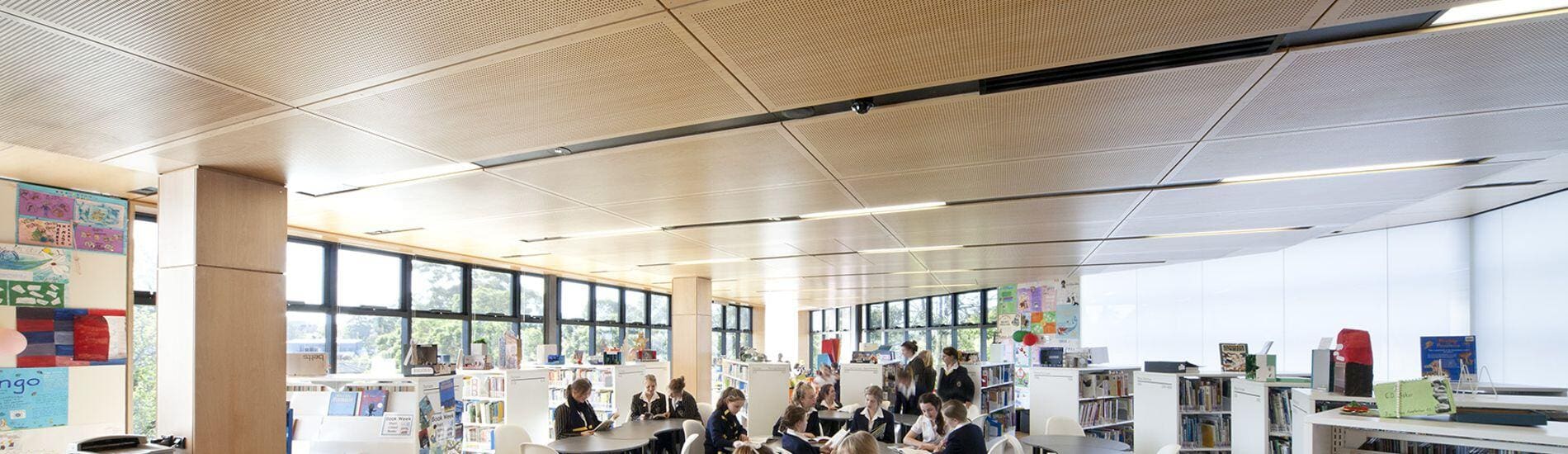
In the dynamic world of professional spaces, the design and aesthetic of an office is no longer just about physical appearance. It is an embodiment of the brand’s identity, a tool to improve productivity levels, and a key element in driving employee satisfaction.

Colin Beattie
CEO
Colin Beattie is a leader in customised architectural lining solutions that balance aesthetics with performance. Under his leadership, SUPAWOOD has built a reputation for distinctiveness and quality manufacturing.
He champions SUPAWOOD’s commitment to architecturally distinctive solutions, expert, personalised service and compliant, sustainable systems that meet the highest standards of fire, acoustic and seismic performance.
Profile: LinkedIn
Posts
Creating a Sense of Depth with Decorative Blade Panels
Striking geometric effects that create visual depth are viable with SUPAWOOD. In the past, creating bespoke, contoured, and three-dimensional ceilings and walls with depth was challenging as traditionally, it involved custom joinery, which was laborious and especially expensive to specify, design and construct.
How to write a specification that won’t be changed
SUPAWOODs purpose in assisting architects with the written specification for our products is to ensure architects and their clients achieve fully compliant design intent. SUPAWOOD has developed a well-earned reputation as the leading compliant supplier of aesthetic timber-based solutions within the building industry.
Introduction to Supawood Waffle Blades
Our latest product offering – WAFFLE BLADES – brings together the best of both worlds; superior acoustic ceilings with custom-made geometric 3-dimensional cube designs.
Acoustic Design for Education
Successful architecture means that rooms for speech must also be designed to facilitate clear communication with consideration to the function and layout of the space. This implies that designers, architects and acoustic consultants should actively collaborate.
Unlocking Design Potential: Why SUPAWOOD SUPASLAT is the Architects’ Choice
In the world of architecture and construction, the selection of materials is crucial to the overall success of a project. The right choice can elevate a design, demonstrating the architect’s vision and talent in a tangible way.
The Complete Guide to LRV (Light Reflectance Value) in Commercial Interiors
Light Reflectance Value (LRV) quantifies the reflectivity of a surface, indicating the percentage of visible light it reflects when illuminated. On a scale from 0 (black, no reflectance) to 100 (white, maximum reflectance), LRV is used to assess various building elements, with specific requirements based on their functions and types.
Vapour membranes – what are they & how do they affect a space?
A vapour barrier or vapour membrane, also known as a vapour retarder, is a material used in construction to prevent moisture from passing through the building envelope, including ceilings, walls, and floors. The purpose of a vapour membrane in a ceiling is to reduce the transfer of water vapour, or moisture, from the indoor space to the insulation and structural components of the ceiling, and to prevent condensation from occurring within the building assembly.
Architecturally Sound. Part 4: Resonance
Situated in the Peruvian Andes, beholds an acoustical marvel within a 3000 year old underground stone maze. It is over a kilometre long and consists of a series of at least 30 corridors.
Architecturally Sound. Part 3: Chirped Echoes & Colouration
Situated in Chichen Itza, Mexico, beholds the Kukulkan Temple. It is a Mayan step pyramid with wide staircases consisting of 91 steps. Kukulkan is the Mesoamerican name for “feathered serpent”, in reference to the Mayan god of the same name.
Architecturally Sound. Part 2: How Flutter Echo Impacts a Space
In Part 2 of Architecturally Sound, we continue our exploration of acoustic phenomena in architecture with a look at flutter echo in Mayan Ball Courts. Learn how flutter echo can impact the room acoustics of a space and ways to prevent it.
Architecturally Sound. Part 1: Why Acoustics Matter in Great Architecture
Vision is our most dominant sense. The hegemony of sight in architecture is a given. “In Western design culture, sight has historically been regarded as the noblest of the senses,” states renowned Finnish architect Juhani Pallasmaa [1].